The Importance of Copper Battery Lugs in Safe Electrical Installations
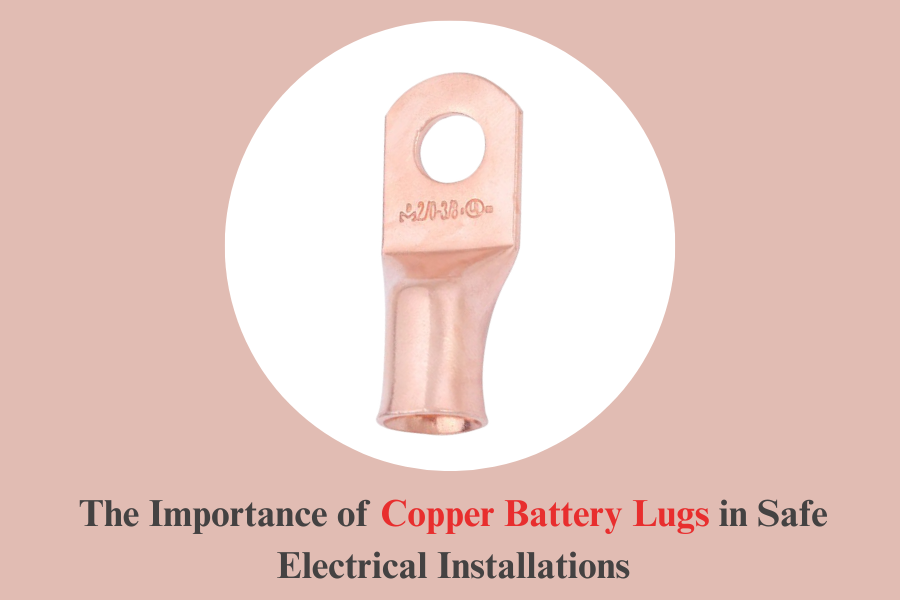
In any electrical installation, the quality of every connection point directly affects system safety and performance. Copper battery lugs, also referred as heavy duty wire lugs in high-current applications, play an important role in creating secure and efficient cable terminations. These components are widely used in battery systems, automotive wiring, solar setups, industrial equipment, and backup power installations where reliable current flow is essential.
A properly selected lug helps ensure low resistance, stable conductivity, and mechanical strength. When overlooked, poor cable terminations can lead to overheating, voltage drops, and even system failure. This makes copper battery lugs a key element in safe electrical design.
Why Copper Is Preferred for Battery Lugs
Copper is one of the most widely used conductive materials in electrical systems because of its excellent conductivity and durability. It allows current to pass efficiently with minimal resistance, which is especially important in battery circuits that carry high loads.
In installations such as inverters, UPS systems, battery banks, and vehicles, cables often handle significant current. Copper battery lugs help maintain a stable connection between the cable and the terminal, reducing the risk of energy loss.
Another important advantage is copper’s mechanical strength. It can withstand crimping pressure without cracking, allowing the lug to form a firm bond with the conductor strands. This secure fit helps prevent loose connections over time.
Role in Electrical Safety
Safety is one of the main reasons these lugs are important. A loose or poorly fitted cable connection can generate heat due to increased resistance. Over time, this heat may damage insulation, weaken terminals, or create fire hazards.
Copper battery lugs help reduce these risks by providing:
- Strong cable termination
- Low contact resistance
- Better heat dissipation
- Reliable long-term performance
In high-current circuits, even a small amount of resistance can create significant temperature rise. Using properly sized heavy duty wire lugs ensures the connection remains safe under continuous load conditions.
For example, in battery-powered industrial equipment or solar storage systems, secure lug connections help maintain safe operation during charging and discharging cycles.
Importance of Correct Sizing
Selecting the correct lug size is just as important as choosing the right material. The lug must match both the cable gauge and the terminal stud size.
If the lug barrel is too large, the crimp may not be tight enough. If it is too small, the conductor may not fit properly, leading to damaged strands or incomplete contact.
Key sizing factors include:
- Cable cross-sectional area
- Stud hole diameter
- Current carrying capacity
- Application environment
Proper sizing improves electrical continuity and reduces the chances of connection failure.
Use in Heavy-Duty Applications
Heavy duty wire lugs are commonly used in demanding environments where cables are exposed to vibration, heat, moisture, or mechanical stress.
Some common applications include:
- Automotive battery connections
- Solar battery banks
- Marine electrical systems
- Industrial machinery
- Power backup and inverter systems
In these environments, the lug must maintain connection integrity despite external conditions. Copper’s conductivity and strength make it highly suitable for such uses.
In many industrial setups, tinned copper variants are also preferred because they offer improved corrosion resistance, especially in humid or outdoor conditions.
Importance of Proper Installation
Even the best copper battery lugs require correct installation to perform safely. Crimping should be done using the appropriate tool and pressure to ensure a solid mechanical and electrical bond.
Improper crimping can leave air gaps inside the barrel, increasing resistance and causing heat buildup.
Best installation practices include:
- Using the correct crimping tool
- Ensuring full cable insertion
- Checking for insulation clearance
- Inspecting the crimped joint
- Applying heat shrink where needed for insulation support
A professionally installed lug connection improves both safety and service life.
Conclusion
Copper battery lugs are an essential component in safe electrical installations, particularly in systems that handle high current loads. Their ability to provide strong, low-resistance, and durable connections makes them critical for maintaining performance and preventing electrical hazards.
Whether used in automotive systems, industrial equipment, or energy storage solutions, properly sized and correctly installed heavy duty wire lugs contribute significantly to system safety, efficiency, and long-term reliability.